
Church of All Nations: A Collaborative Effort to Preserve a Sacred Space
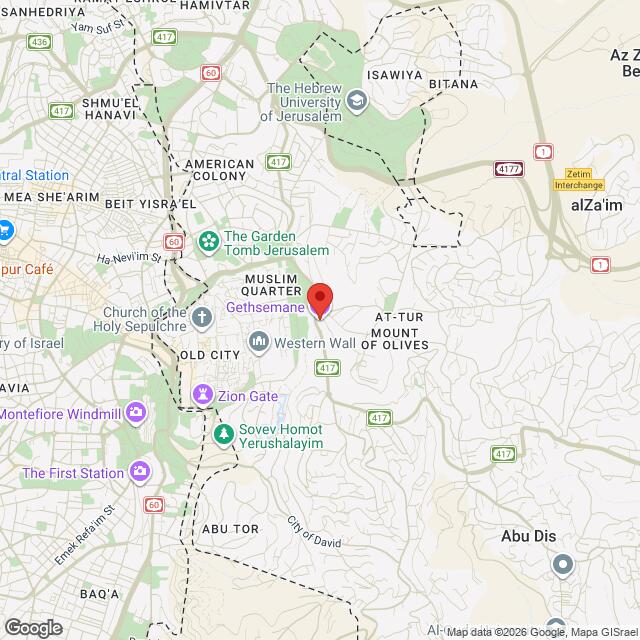
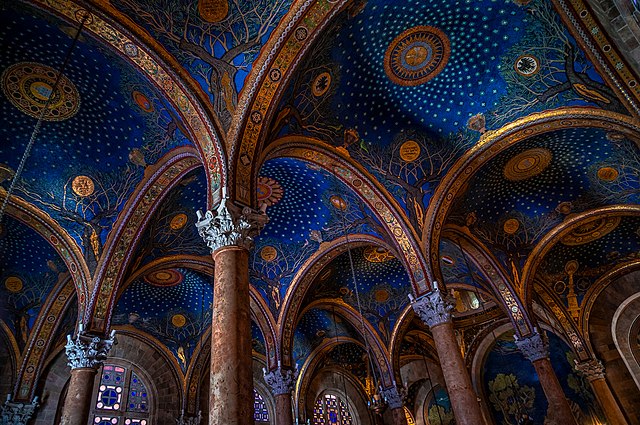
Take a step inside the Church of All Nations and the first thing you notice is the mosaic ceiling; gold stars set against a blue sky and tangle of olive branches reaching across each arch. Embedded in the masterwork are the coat-of-arms of the twelve countries whose donations funded the construction. Completed in 1924 and sitting right at the foot of the Mount of Olives, it was built on the rock where tradition says Jesus prayed the night before his crucifixion. Hence why it’s also called the Basilica of the Agony.
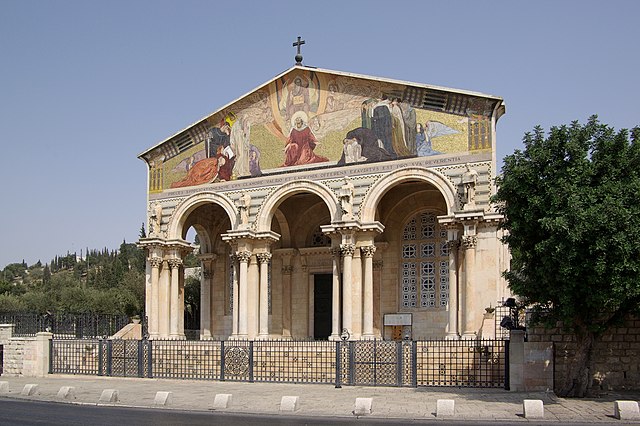
Designed by Italian architect Antonio Barluzzi, the church blends Neoclassical design with Corinthian columns and 12 small domes. The façade is adorned with a truly stunning mosaic, and as above, so it is below with parts of the original Byzantine mosaic floor – discovered during construction – now preserved under glass and available for viewing.
Just outside the church is the Garden of Gethsemane, where Jesus went to be alone during a moment of intense agony. In the Gospel of Luke, Jesus knelt down and prayed as his sweat turned to blood, the Agony in the Garden of Gethsemane, highlighting his struggle. Today, the Church of All Nations is more than just a site to snap a photo, it still functions as a place of worship for Christians who come to deeply connect with Jesus’s struggle.