


The Enduring Heritage of Jerusalem’s Armenian Quarter
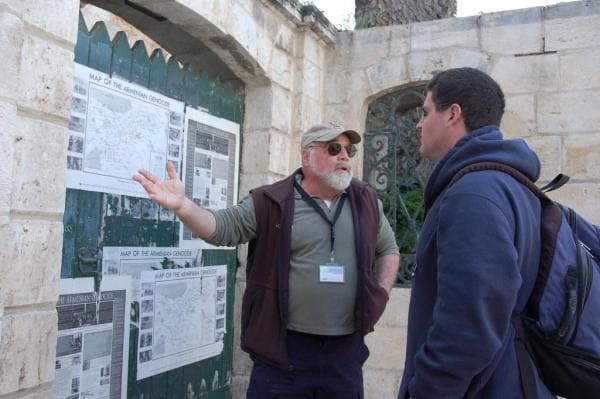
The Armenian Quarter is the smallest and most tranquil of the four distinct neighborhoods located within the walls of Jerusalem’s Old City. As you leave the bustling souks of the Christian and Muslim quarters behind, a profound silence settles over the cobblestones, signaling your arrival in a community that has maintained a continuous presence here since the 4th century. The high, fortress-like walls of the convent give the area a secretive atmosphere, yet the beautifully tiled street signs offer a warm visual introduction to the Old City Armenian heritage that defines these ancient alleyways.
Your journey leads inevitably to the spiritual heart of the neighborhood, hidden behind thick stone gates. Stepping into the monastic compound during scheduled visits, you can discover the majestic St. James Cathedral in Jerusalem, a 12th-century Crusader structure illuminated by the golden glow of hundreds of suspended oil lamps. The rhythmic chanting of the liturgy and the scent of incense transport you back in time, reflecting a faith tradition that established the first printing press in the city and has guarded its distinct rites for nearly two millennia.
While much of the residential area remains private to protect the community’s way of life, the quarter’s artistic legacy is open for you to admire. You will see shop windows filled with the vibrant floral patterns of Jerusalem Armenian ceramics, a craft brought to the city to restore the Dome of the Rock in the early 20th century. Although the local population has decreased due to economic challenges and political tension, a resilient community remains, keeping their schools, language, and culture alive within the holy city.
